
Depending on the season, Czechs are avid hikers, bikers, and skiers who look for any occasion to escape city life and recreate in the country’s mountains, flatlands, and valleys. For me, the promise of a rich outdoor life was almost as great a draw to return to my husband’s home country as were the benefits I envisioned of being multilingual.
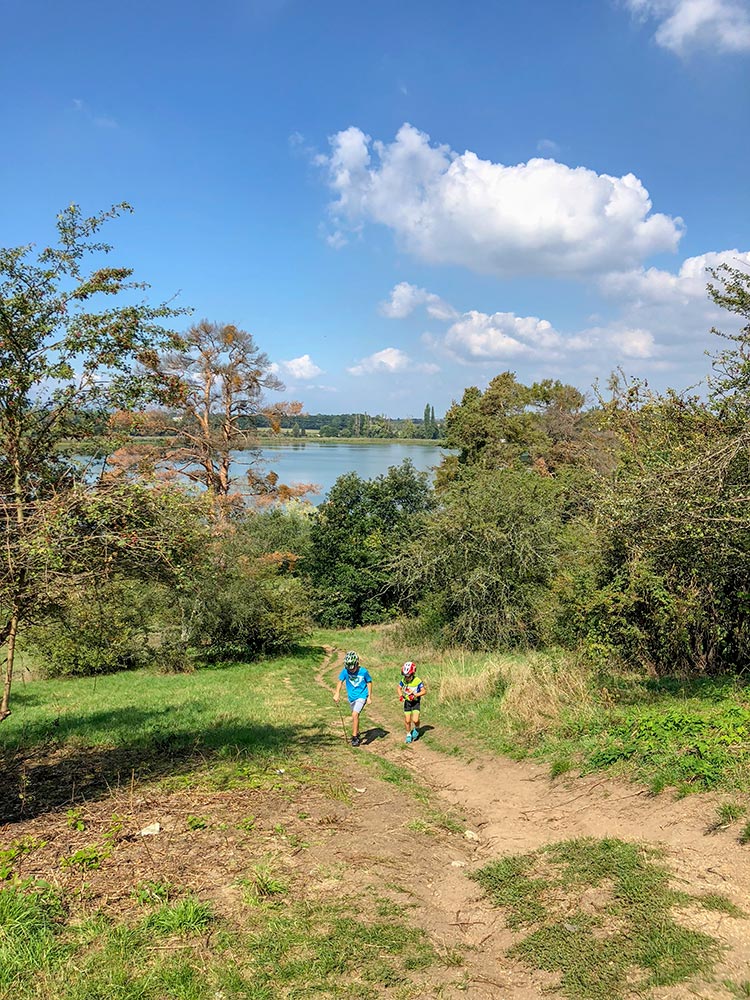
When we returned to the Czech Republic 13 years ago (after two years spent living in my home country, the US), our infant daughter Anna rode in a bike seat that attached to my husband’s bike. Later, she graduated to her own bike, and my son rode in the seat. Now, our three children ride multi-speed mountain bikes, and if given the proper incentive (i.e. the promise of a playground or a pond to catch frogs), they can pedal as long as we adults can.
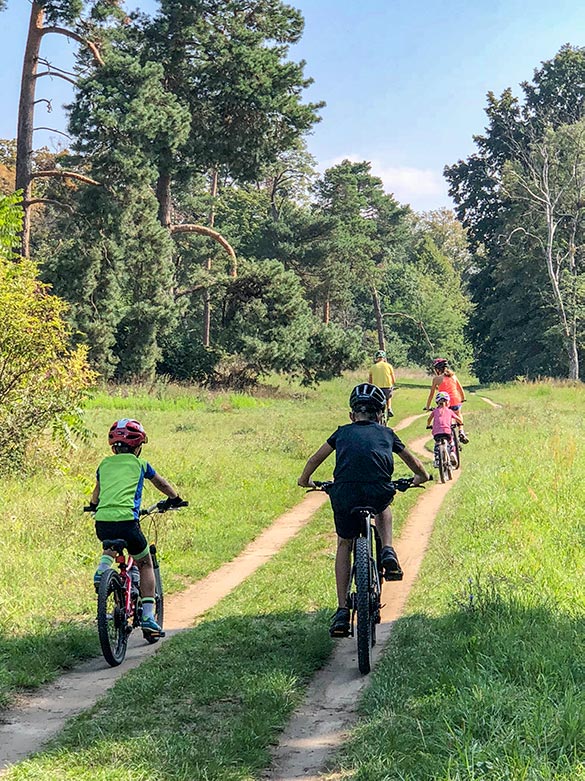 Spring and autumn are prime cycling seasons for my family. In between baseball tournaments, back-to-school shopping sprees, and settling into the school year routine, we spend the weekends of Babí léto (Indian summer) exploring the Czech Republic on two wheels.
To make our biking weekends more fun, we often travel with other Czech families, an element that both simplifies and complicates our adventures. Traveling as a group ensures the children have friends to entertain them. For adults, we gain the benefits of shared cooking and cleaning responsibilities, particularly when renting a communal cottage.
Getting everyone geared up and ready to go for a ride takes a bit longer, but the rewards of watching the children push each other’s physical limits, with older children helping the youngest ones, outweighs (for the most part) the hassles of finding a space in a restaurant for a group of 20.
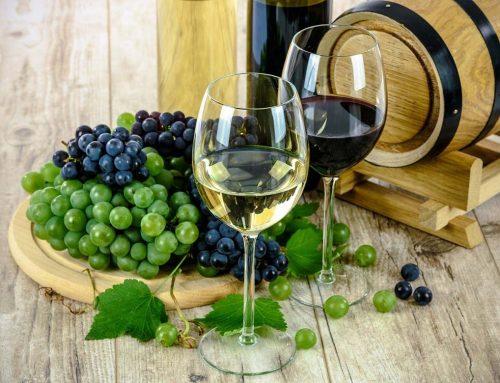
I’ve also learned that it’s far easier to try out new Czech vocabulary while sipping a local Rulandské šedé (Pinot Gris) at a vineyard market stand than in any classroom.
Over the years, we have discovered the best time to visit the southern part of the Czech Republic, known as Jižní Morava (Southern Moravia), is during the autumn vinobraní (wine harvest), which includes festivals, medieval parades, and plentiful opportunities to taste Czech wines straight from the cellars of the winemakers.
Each Moravian village has its own local wine harvest weekend during the months of September and October. In recent years, the events surrounding the wine harvests even include dýňobraní (pumpkin harvest) as well as cyclobraní (an Author-sponsored bike race held in Valtice).
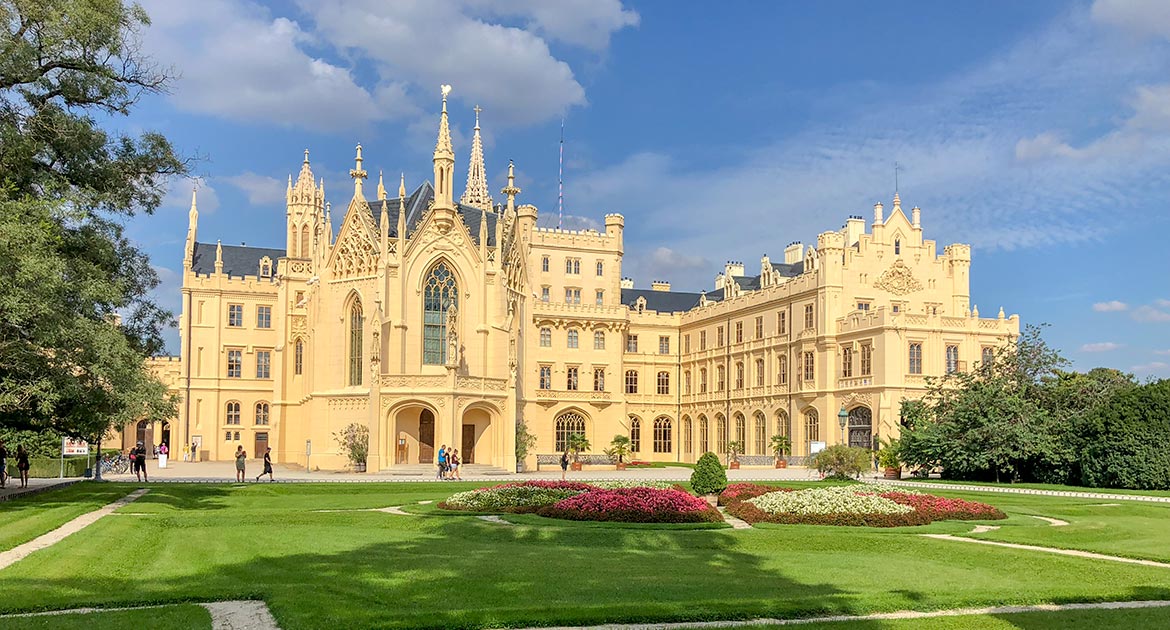
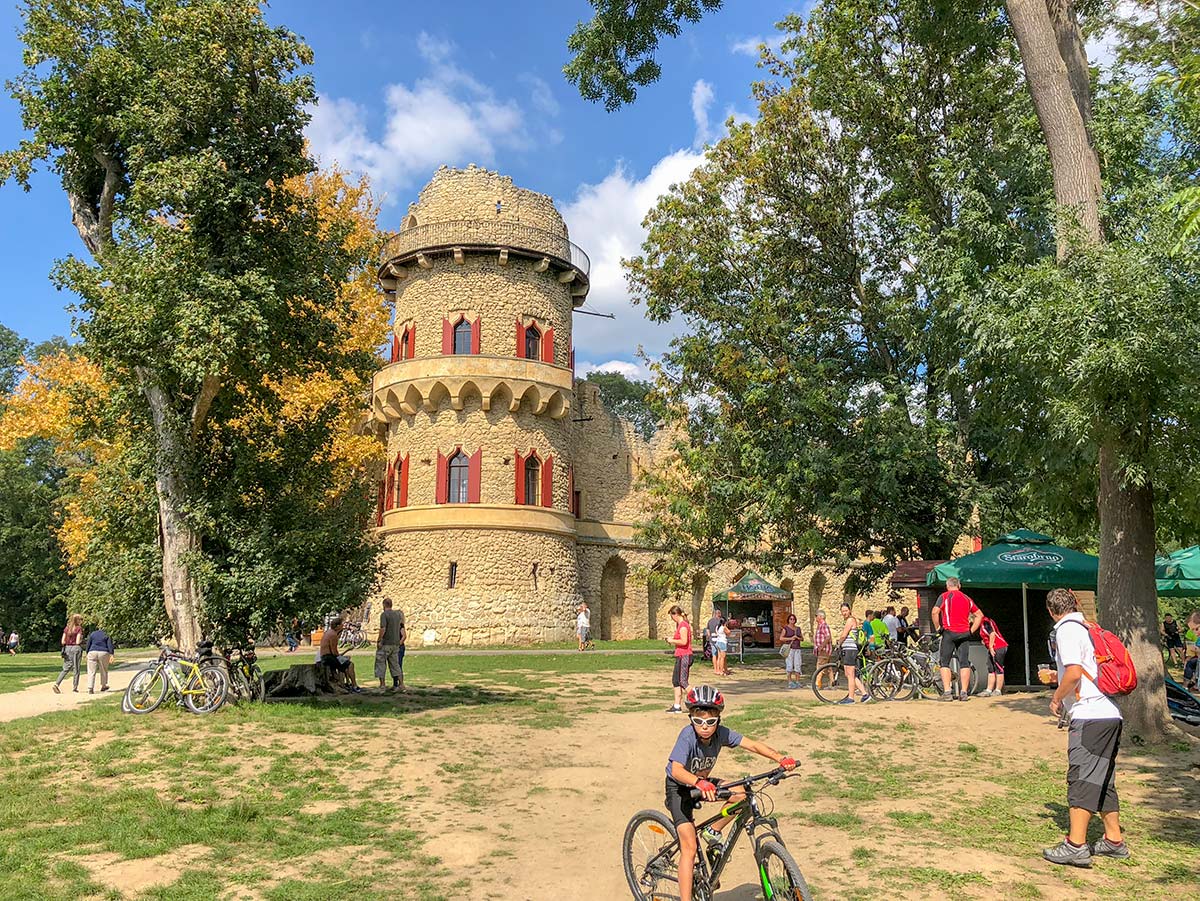
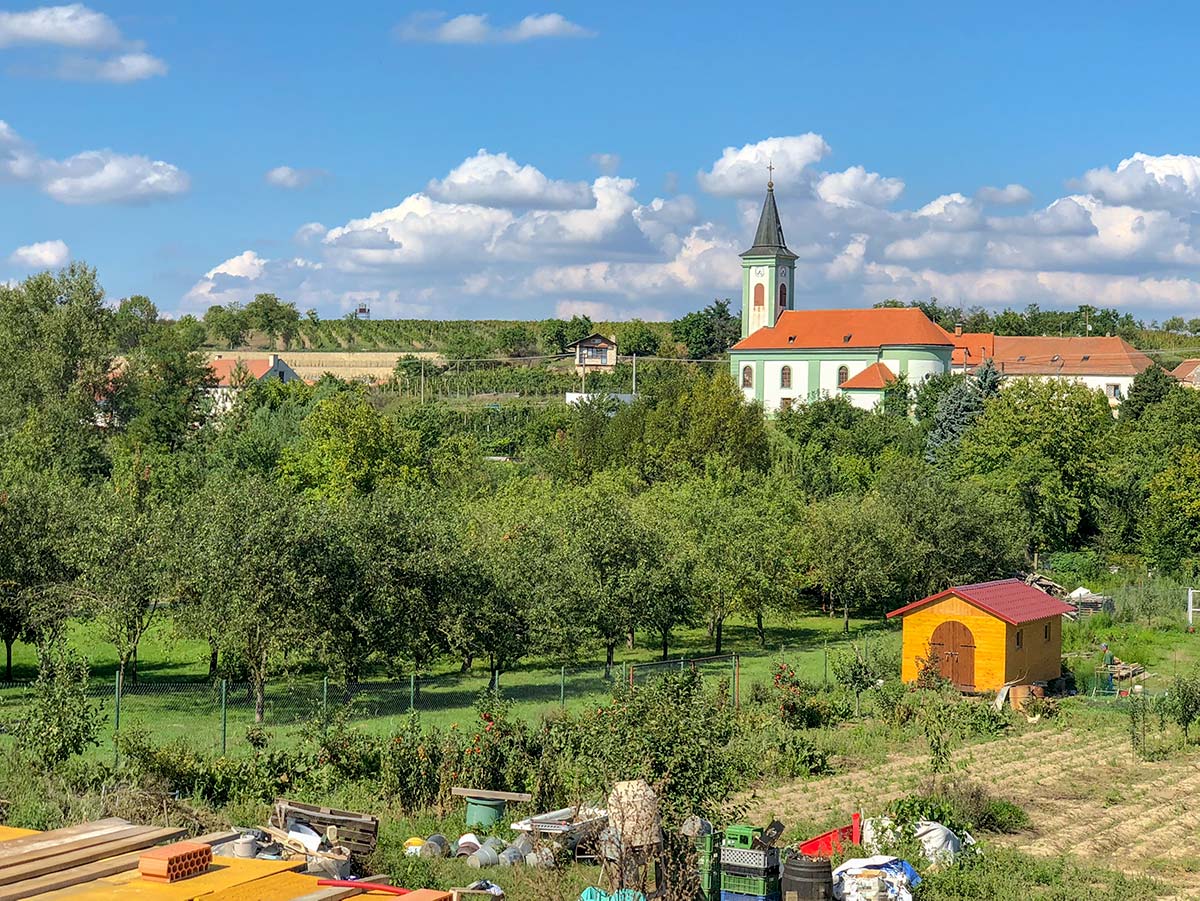
Although the Mikulovska region, is comprised of 30 different wine-making villages, the towns of Lednice, Valtice, and Mikulov lie at the heart of the country’s long-standing wine industry tourism. They are also home to some of the region’s most impressive castles, including the Lednice chateau, the roots of which date from the 12th century (although the castle was rebuilt during the 16th century when the Lichtenstein family ruled the region).
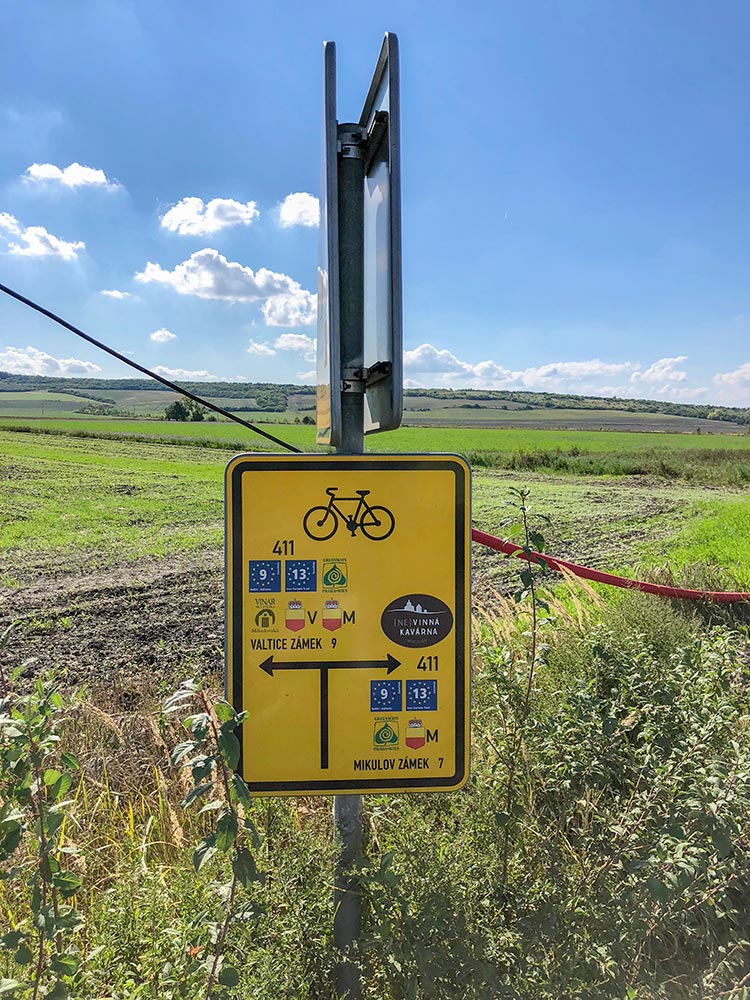
The extensive cycling trails and footpaths throughout the Lednice-Valtice complex (which was added to the UNESCO World Heritage List in 1996) combine beautiful scenery with routes that children (as well as older adults) can handle with ease.
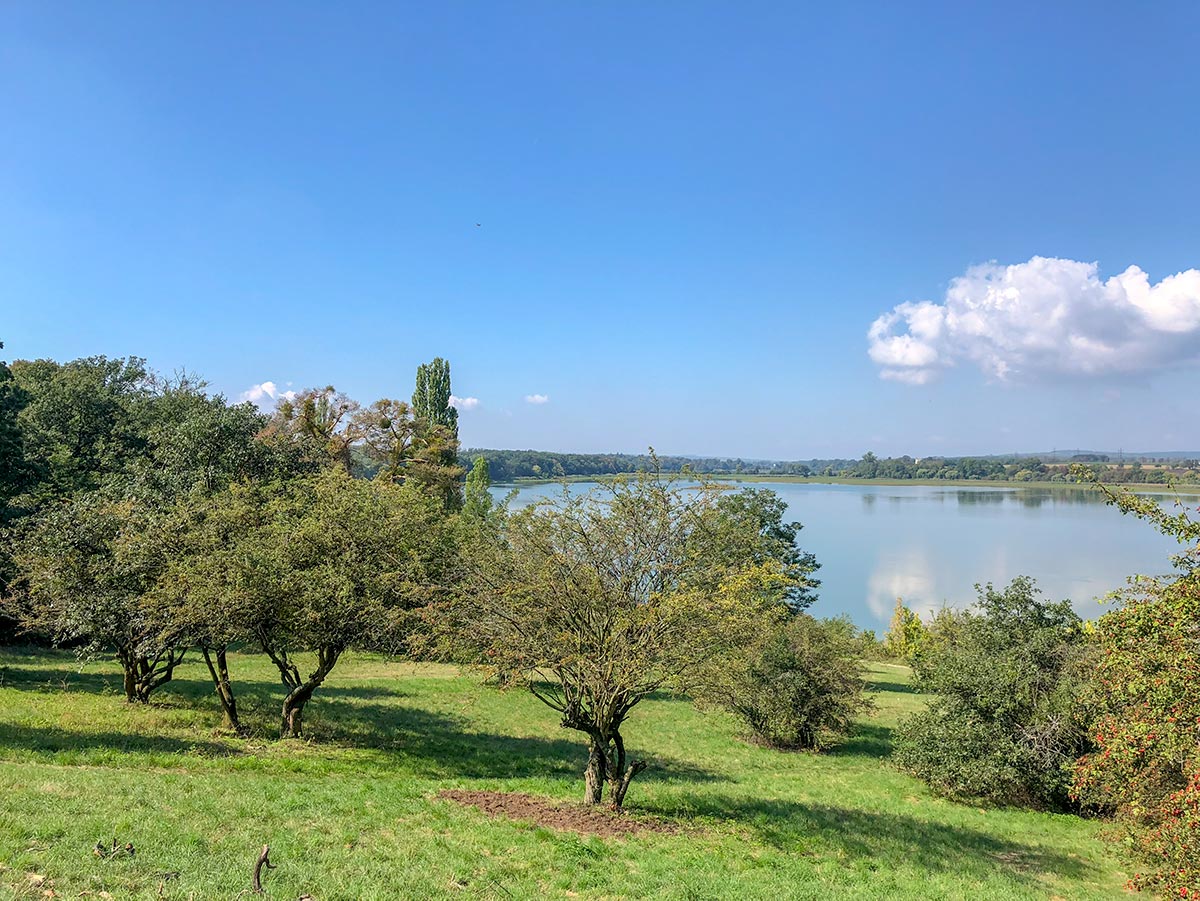
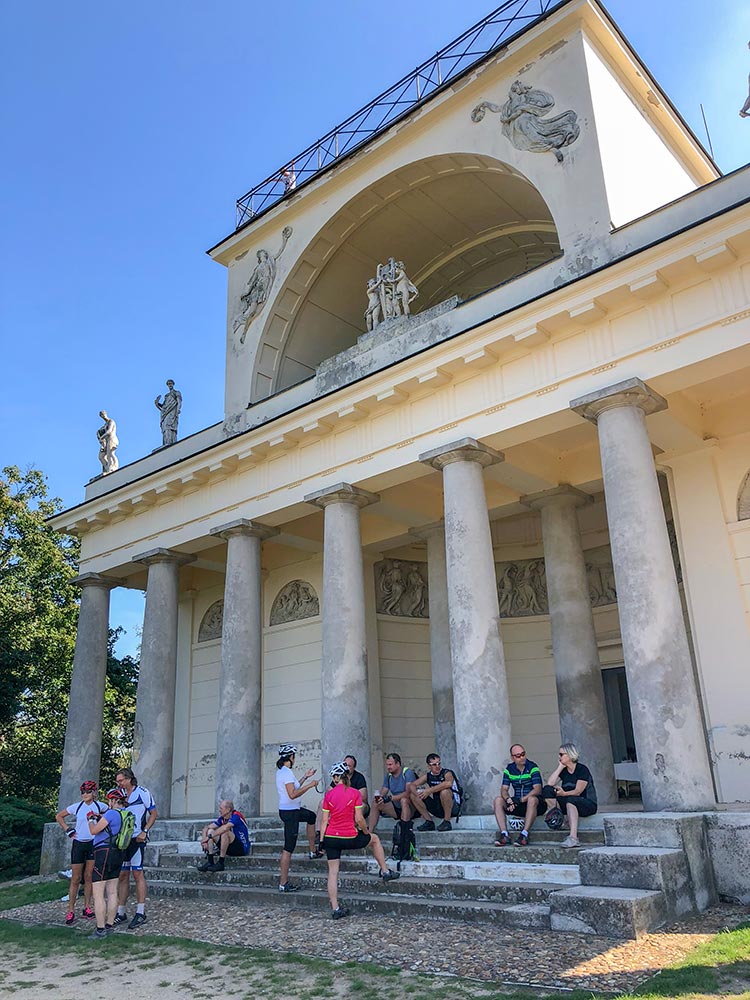
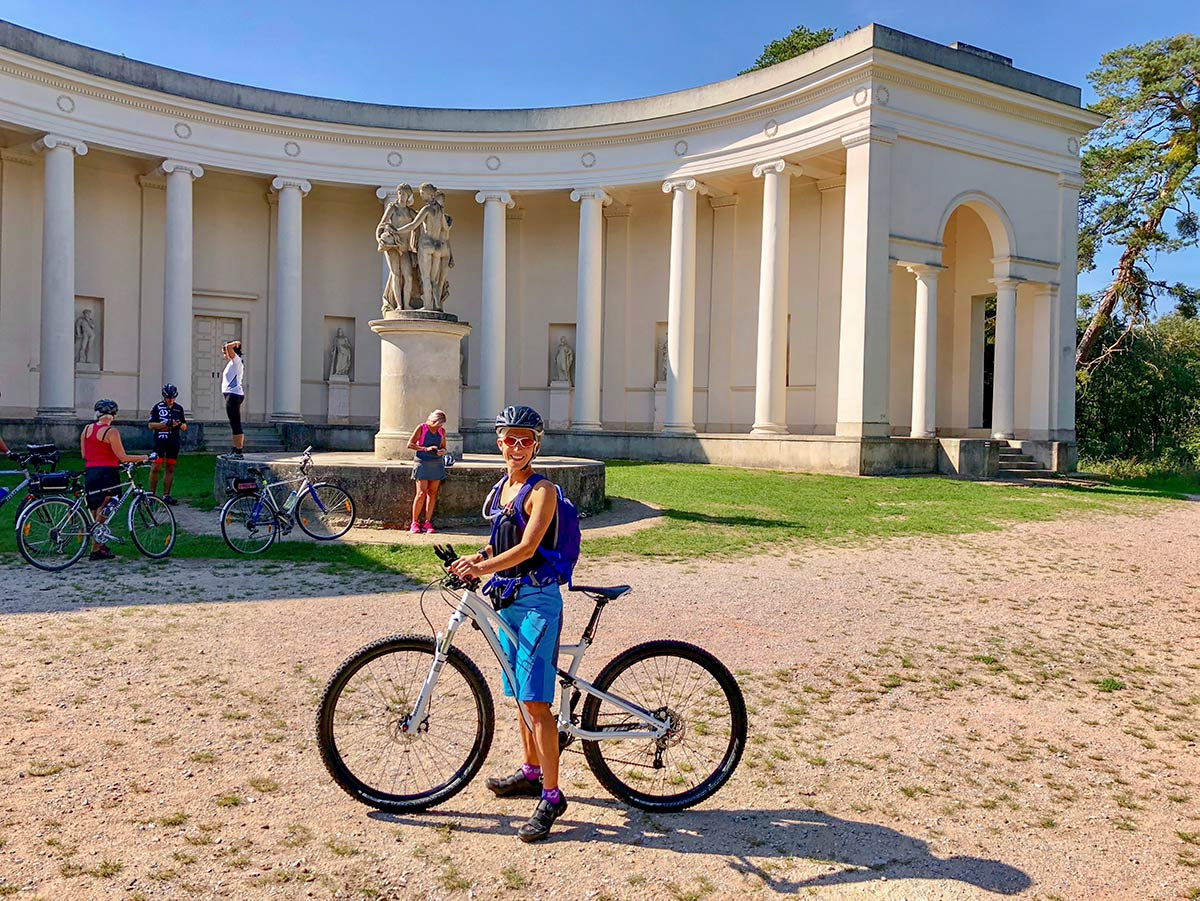
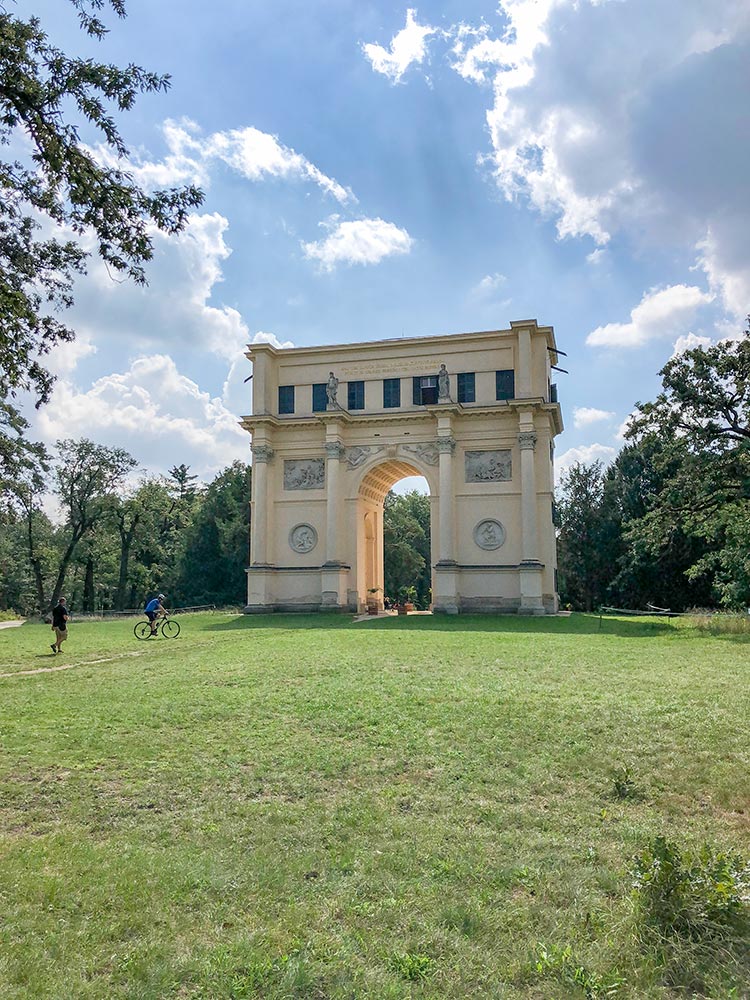
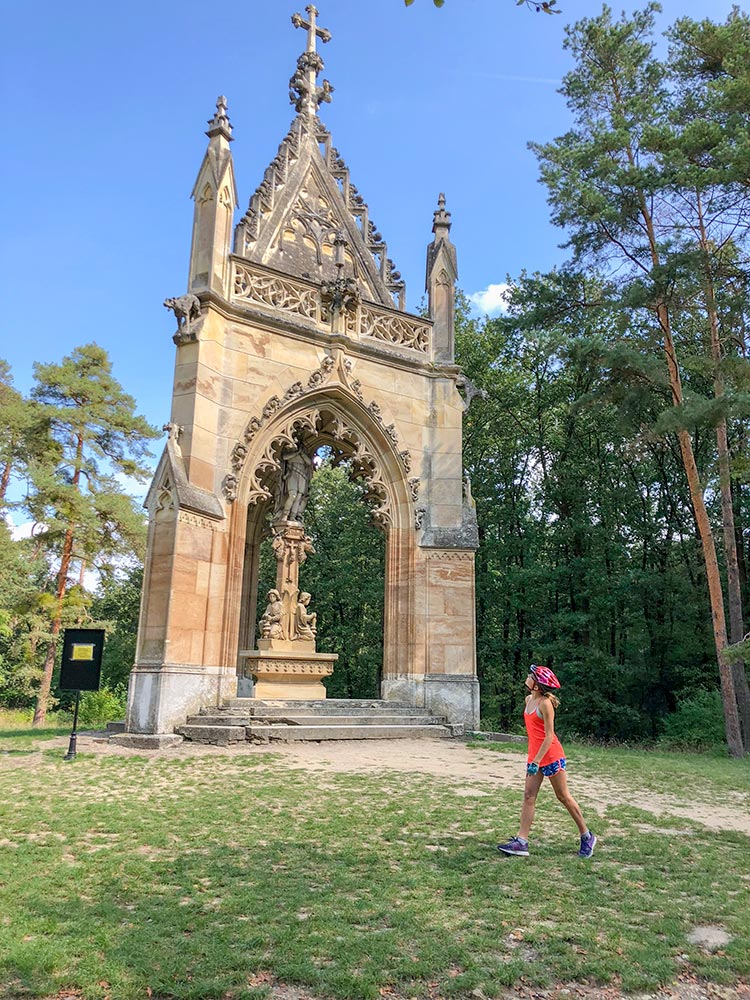
As you cycle between Lednice and Valtice (and other nearby villages), there are plenty of pleasant distractions, like Apollo’s overlook, a 19th chateau-type structure with views of Lednice’s pond, vineyard paths with ripe grapes to sample, and stands serving wine, beer, and snacks. There are also side paths and switchbacks, which can extend an easy morning’s ride into a full-day trip.
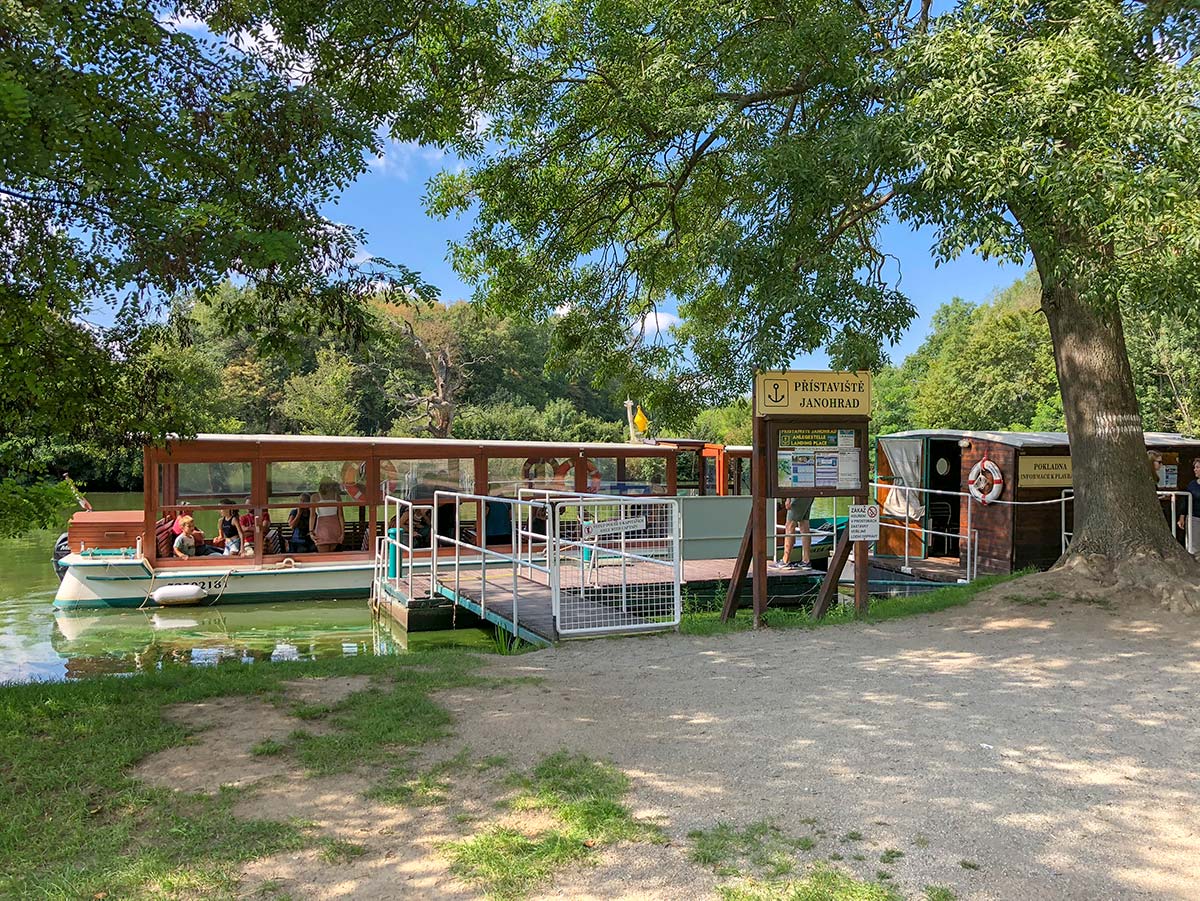
If you are interested in historic castles, the Lednice chateau is a romantic Neo-Gothic style, Renaissance chateau with an extensive English-style park complete with castle tours, boat rides, and horse-drawn carriage excursions.
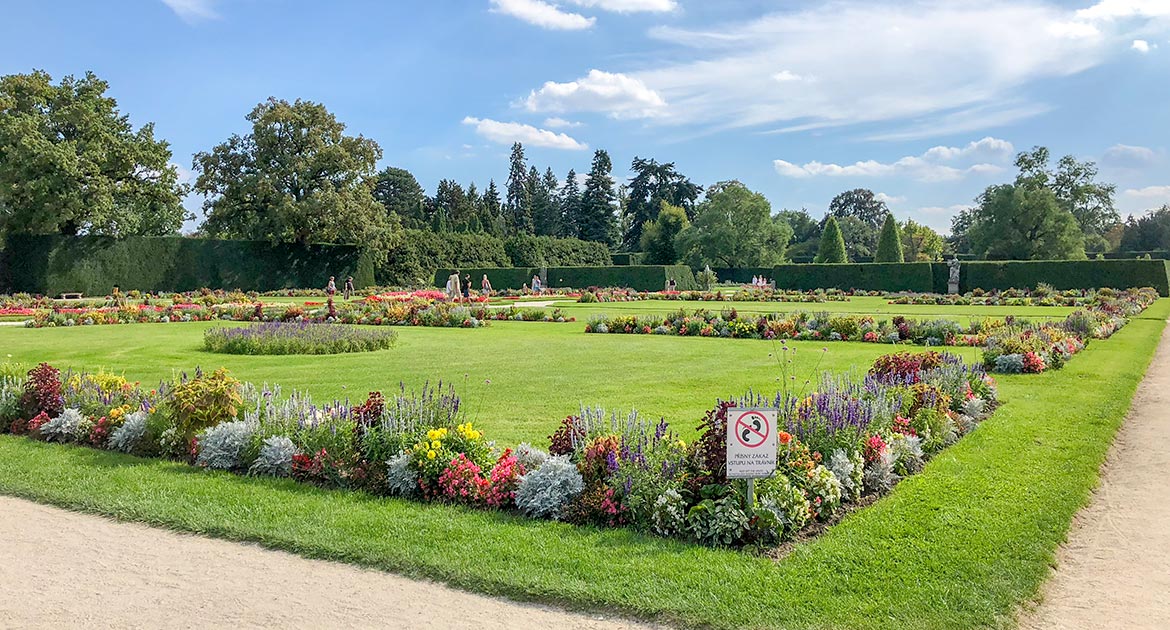
Biking through the gardens is forbidden, but you can either lock your bike at the entrance or walk through pushing your bike. Although none of the guided tours is offered in English, when we visited with my mother and aunt they found the English pamphlet was sufficient to get a feel for the castle’s history.
The nearby town of Valtice offers the country’s most prominent wine school (located at its main square) and Salon vín České republiky (the nation’s official wine tasting cellar where visitors can sample the country’s top 100 wines). Czechs drink more wine than the country produces, and many Moravian wines never make it out of the region. (Another reason to visit wine country in person.)
Just a few kilometers away, Mikulov, a medieval hilltop village on the Austrian Czech border, houses two of the country’s largest historic wine barrels (originally built to store wine for serfs) in its cellar. Mikulov is a starting point for part of the Prague-Vienna Greenways cycling path that runs through the region’s vineyards.
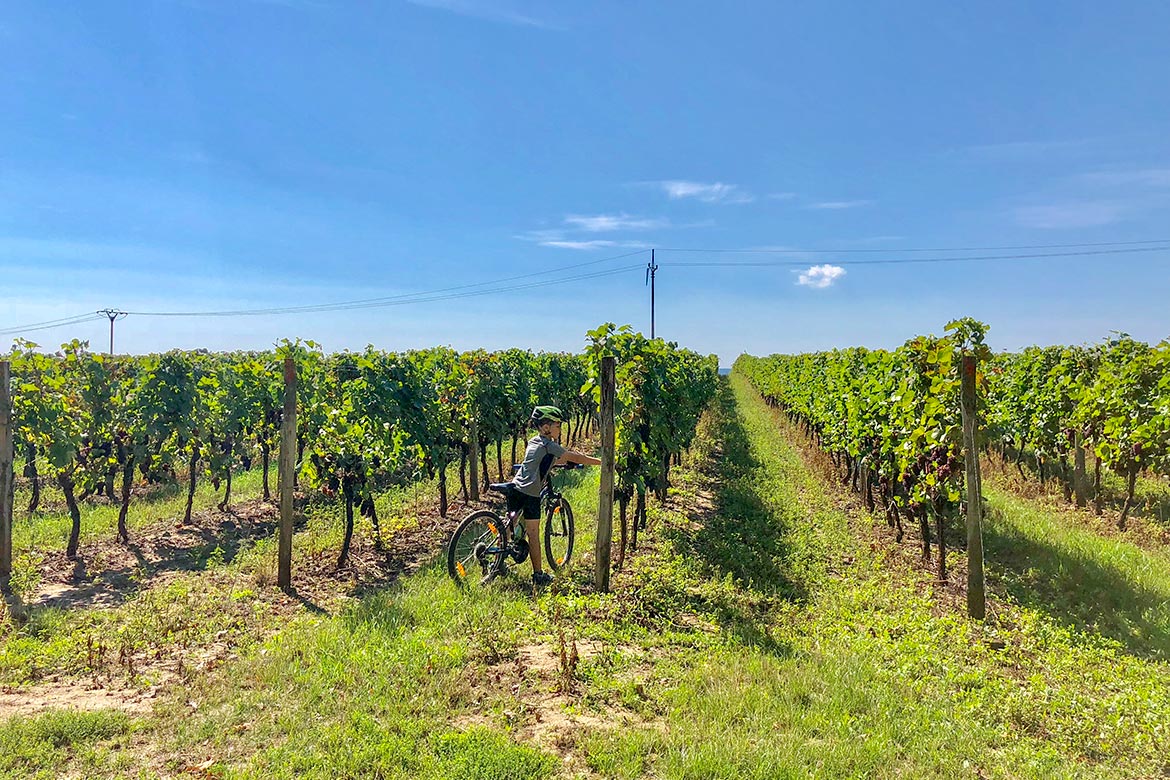
While you’ll see plenty of people strolling the grounds and walking along the paths of Moravian wine country, bikers often outweigh the walkers, perhaps because the vineyards of Moravia are such a comfortable place for cyclists of all ages and abilities.
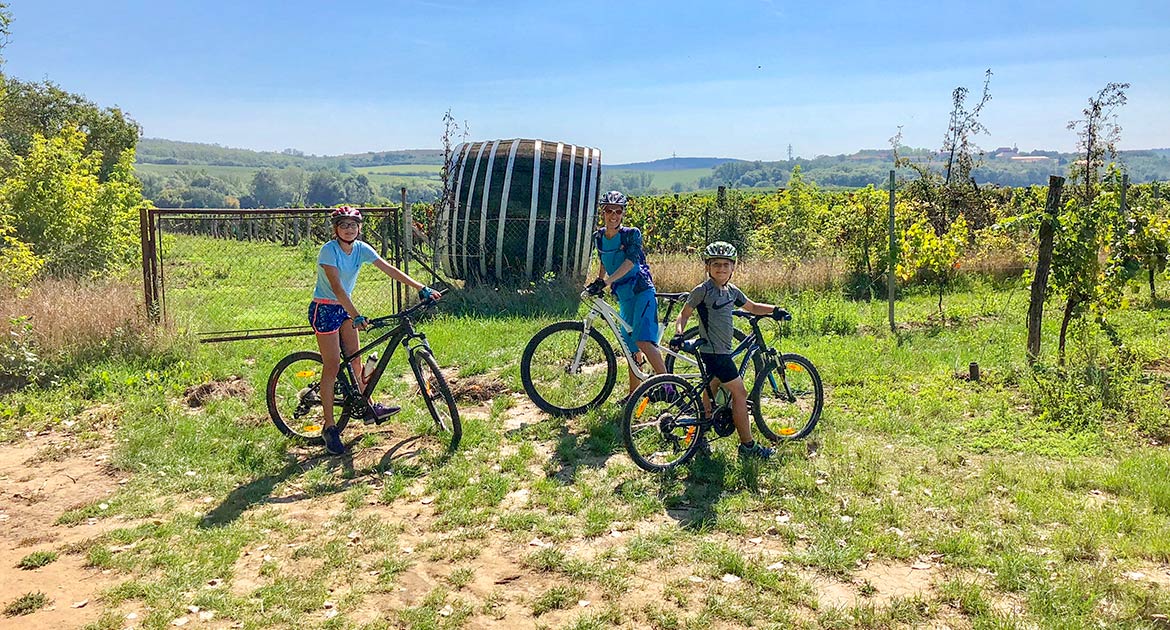
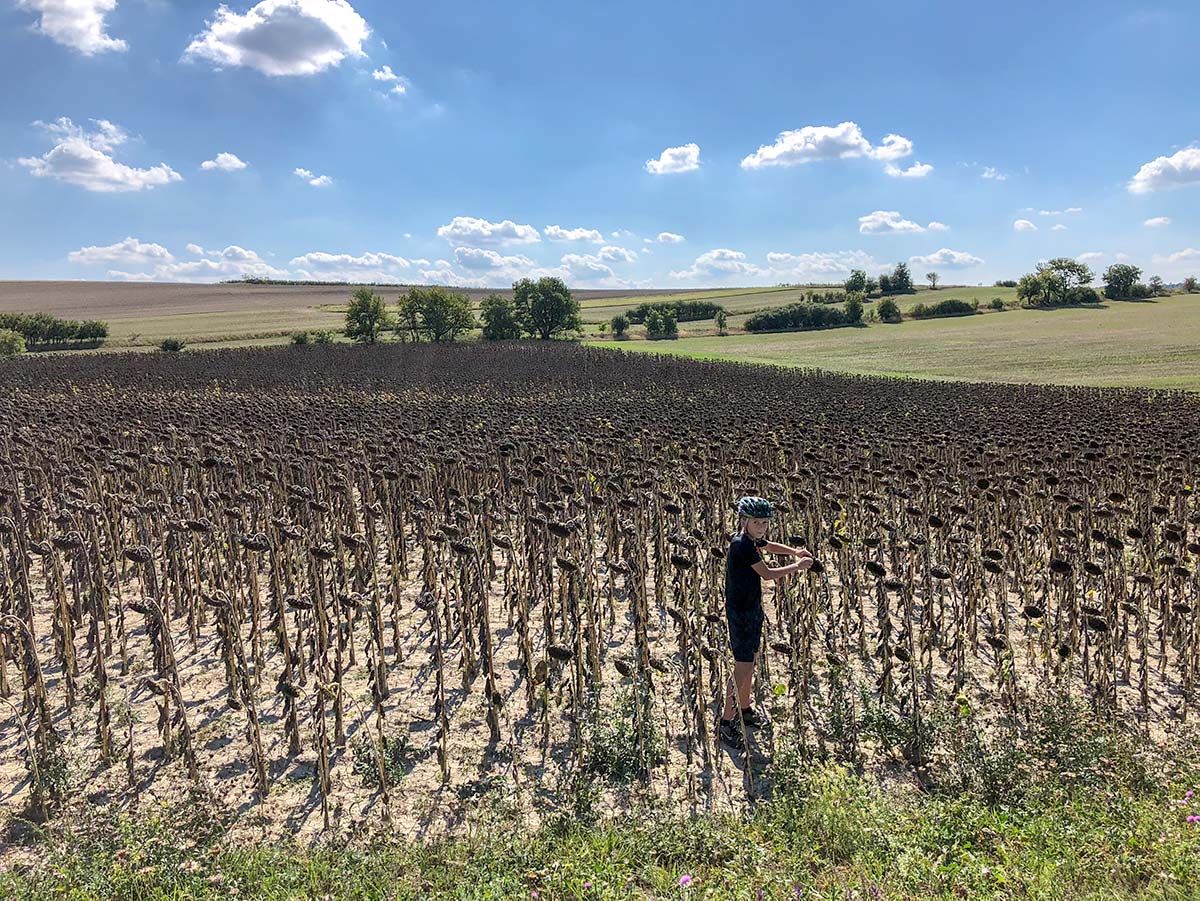
This past weekend we made our ritual autumn visit to Moravian wine country to taste local wines, pedal through fields of grapes and sunflowers, and catch up with friends who shared our need to spend the weekend outdoors.
Our group comprised 5 families – 10 adults and 10 children, ranging in age from a six-month old infant (who cruised behind his father in a Chariot bike trailer) to 13-year-old Anna. For the second year in a row, we rented a sklep (wine cellar) which had been converted into apartments with a communal kitchen, a wine cellar stocked with local wines, and a terrace with a grill.
As so often happens when you live in a country whose inhabitants like to travel, we weren’t the only families leaving Prague and heading south. The Friday afternoon drive on the D1 highway toward Brno seemed endless. As a result of ongoing construction, every thirty kilometers or so the traffic slowed to 80km/hour and narrowed to one lane. As we inched past tractor trailers and bumped over potholes, I grew more impatient.
Southern Moravia was just over 200-kilometers from Prague, but depending on traffic, it could take between 2 ½ to 3 ½ (plus) hours. (One minor downside to this beautiful location and perhaps an incentive to take the train to Brno, if traveling without bikes.)
Grumpy and annoyed in the back seat, the children asked every few minutes, “Are we there yet?” Despite having looked forward to this weekend, I, too, was bordering on hangry (a combination of hunger and annoyance that I usually associated with my children).
WhatsApp messages flew back and forth among the families who comprised our group. Who would arrive first? Where should we stop for groceries? Would the wine cellar where we stayed have local burčák (a young, fermented wine produced during autumn harvest) on hand or should we stop and buy some?
By the time we arrived at our destination, I was more than ready to unload my family and sample a glass of wine from our host’s cellar.
As the other families piled in and the weekend got underway, we settled into a rhythm. The children disappeared to play games, sneak grapes from the vines on the terrace, and sample the baked treats each family had brought. Adults cut cheese and salami, poured glasses of Ryzlink vlašský (a dry local white wine) from a 5L jug, and compared potential routes for the following morning’s ride.
We shared back-to-school stories, played DJ using a portable speaker, and Anna brought out her “Einstein’s math teaser” homework (which stumped us all). Each morning, we loaded up our backpacks with snacks, filled water bottles, and strapped on helmets for the day’s ride.
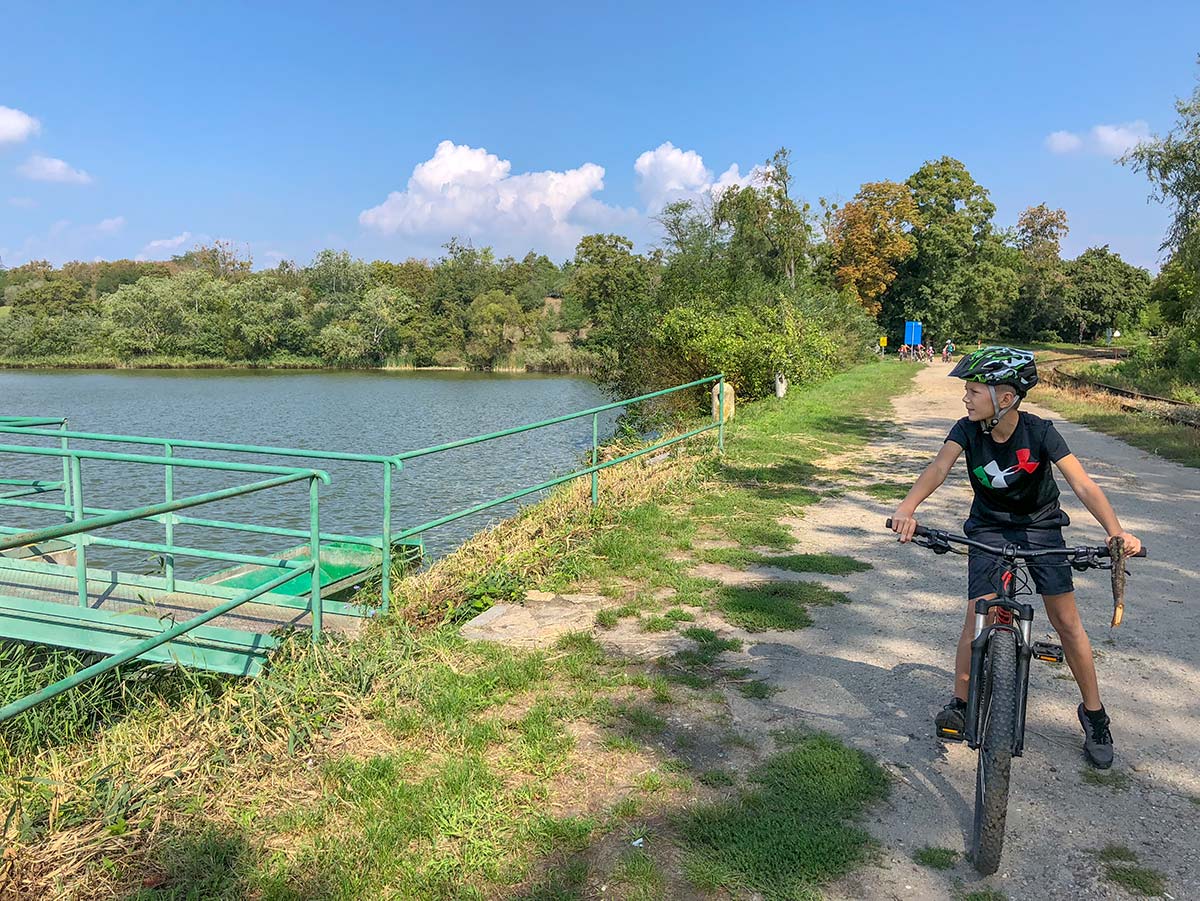
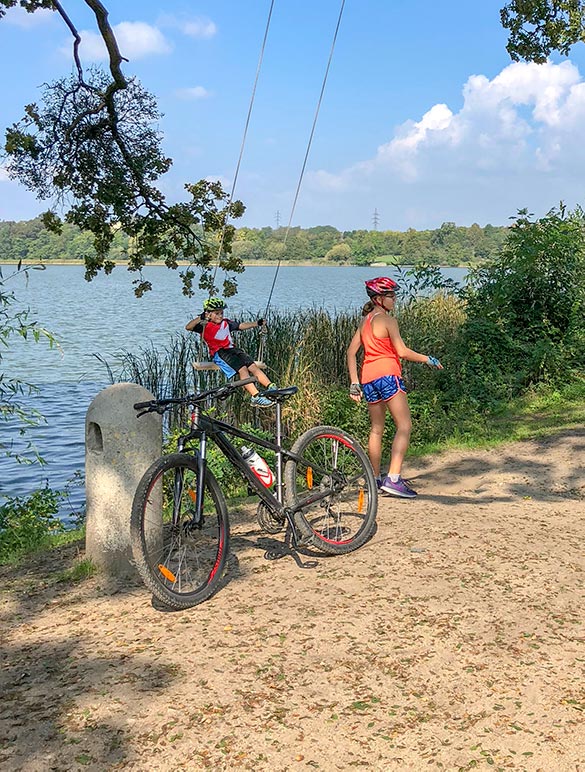 Once on the bikes, we started and stopped more times than we could count. We stopped by a pond to watch a cormorant diving for fish.
We stopped to swing our children one-by-one on a wooden swing by the bike path. We stopped to fix fallen-off bike chains and to check our maps to make sure we were heading in the right direction.
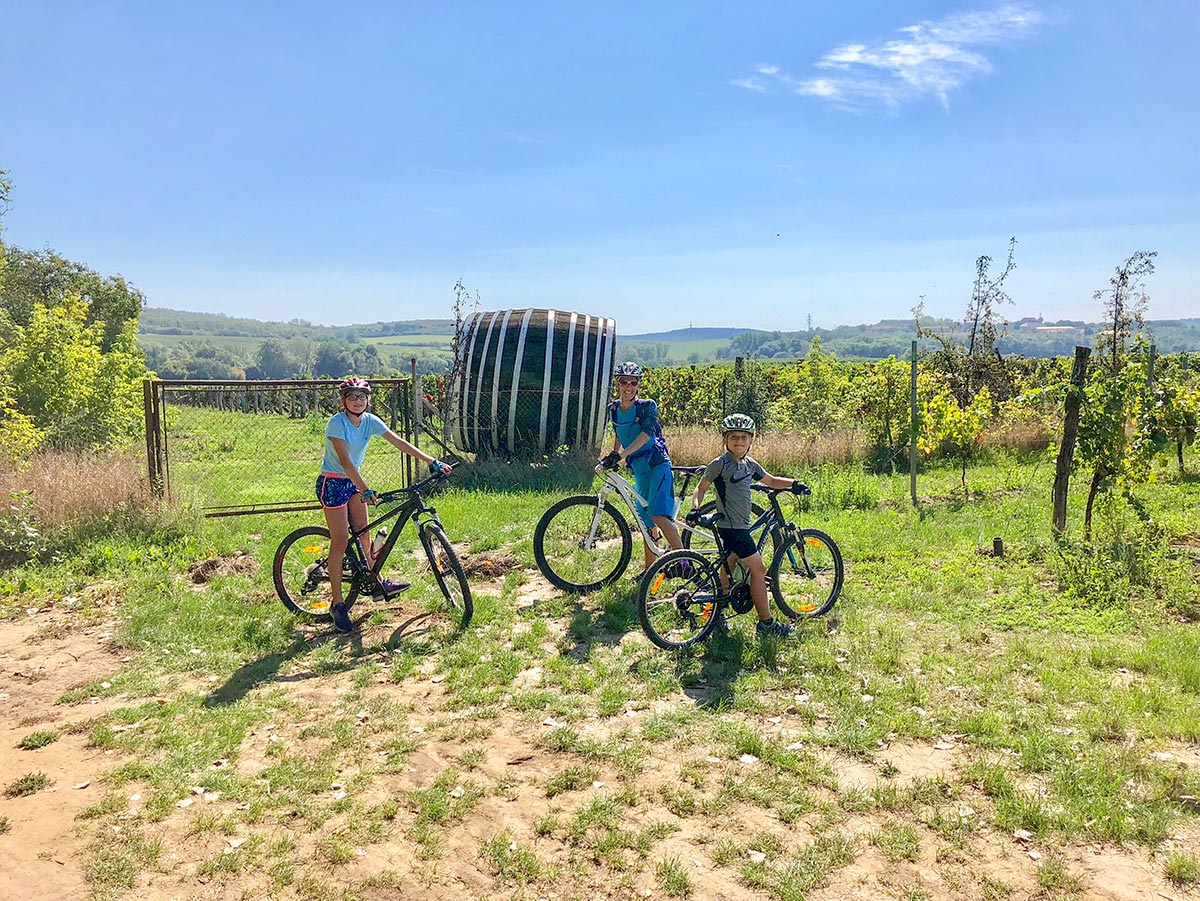
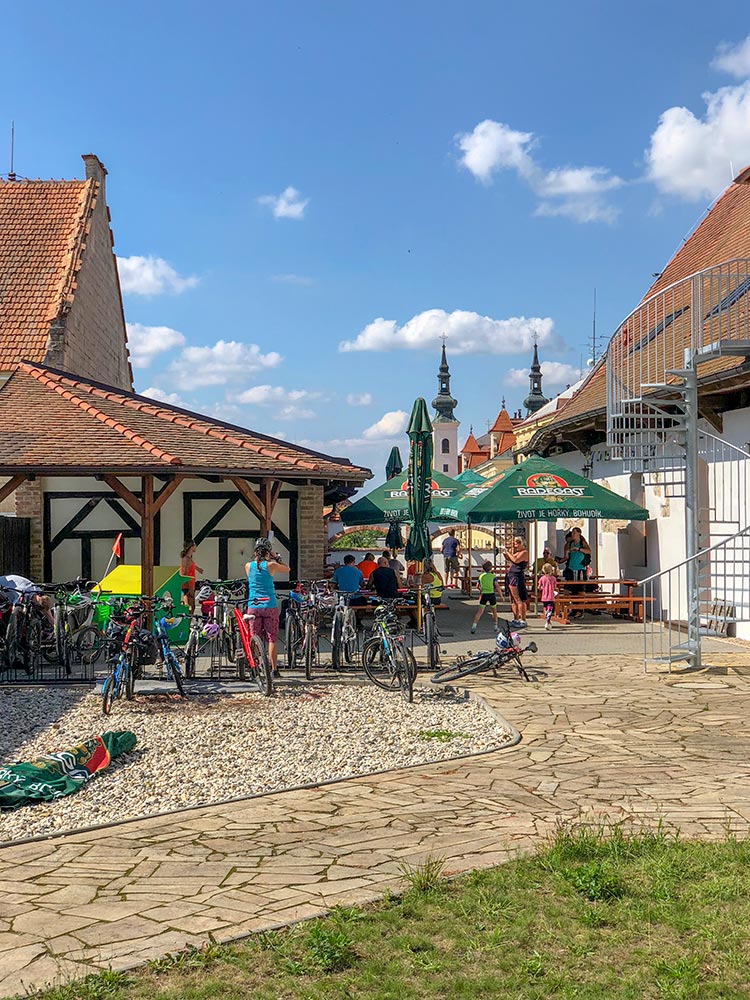
We stopped to sample grapes (hoping to go unnoticed) and ended up chuckling when a vineyard worker not only noticed us but took the time to point out the best (not chemically treated) grapes for the children to taste. And, of course, we stopped as we cycled from pub to pub looking for a place with enough seats for everyone to have lunch.
Over the 3 days, we clocked just under 80 kilometers, which seemed a decent amount, particularly for the youngest among us. When the weekend drew to a close, no one wanted to go back to Prague.
On the way home, I asked my children what their favorite part of the weekend was. Eleven-year old Oliver said, “Well, Mom, I’d say the kamarádi (friends) and the příroda (nature).
I couldn’t have agreed more.
For me, active travel in the Czech Republic is about getting a closer look at a country where castles, chateaus and medieval ruins dot the landscape, beer is cheaper than water (this can be a positive or a negative), and children are encouraged to join adults in adventures that often lead the long-way home.
It is about spending time with friends and being able to appreciate life at a leisurely pace. It is also about respecting and appreciating nature, learning new skills (i.e. putting on bike chains), and sharing recipes (American-style chocolate chip cookies are always a hit).
For more information on this year’s Wine Harvest events in Southern Moravia read here.
Gallery
(click on photos to enlarge)
Emily Gates Prucha has lived in the Czech Republic for more than 15 years. She has written about multicultural family life and outdoor adventuring for The Prague Daily Monitor and Prague.TV and currently blogs at Half ‘n Half. She joined IWAP in 2018 to meet new friends and share her experiences in this country that has become her adopted home.