

Few life events throw a family into a tailspin like an international move. Multitudes of decisions, a plethora of unknowns, urgent deadlines, and countless boxes to pack precede the next even bigger step: the move itself. After a few hours on a plane, footsteps into a greater unknown are just the beginning. Locating just the right house, finding a local grocery store, knowing which flour or butter to buy, choosing a doctor (one that speaks your native language), and finding a school for your children are just a few of the many non-negotiables waiting to be discovered.
For some newcomers, these challenges are welcomed encounters. For others, sudden immersion into a foreign culture has an immediate impact laced with fear and trembling.
For most people relocating internationally, new sights, sounds, and smells initially create a sense of excitement. Differences between the new home and our home culture intrigue us, while our camera captures the images for our next family photo album. For a time, “foreign” translates as exhilarating. Social media sites record our enthusiasm . . . until the novelty begins to wear off. Suddenly, we are no longer thrilled about the extreme or even subtle differences between our old home and our new home. Our inability to read and write unexpectedly makes us feel incompetent and illiterate. And then the big question hits us: WHAT HAVE I DONE?
International communities tend to have seasons of new arrivals. If you are one of the latest expats to join Prague’s global community, welcome. If you are beginning to experience some of the stresses associated with an international move, please find comfort in knowing that you are not alone. Many old hands have gone before you and many newbies are walking alongside you now. You might find some comfort in knowing that your mixed bag of emotions is completely normal. So normal, in fact, that there is a myriad of research to explain exactly what you are feeling and experiencing.
The stress associated with cultural adjustment is called culture shock. While some people have a much easier time adjusting to a new culture, others do not have such an easy transition. Cultural adjustment can take weeks, months, or even longer. While each newcomer might find the complexity of acculturation different, the stages of adjustment are extremely predictable.
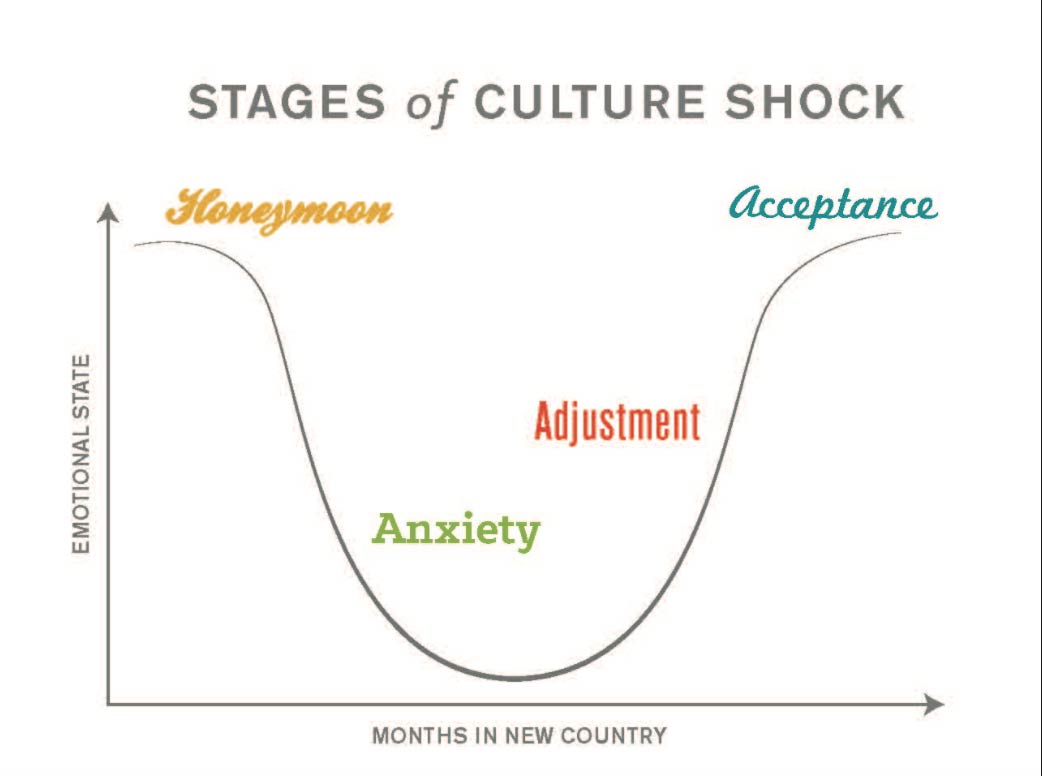
Experts agree that culture shock is caused by the sudden loss of the familiar, which triggers a sense of disorientation. Expats experiencing cultural adjustment move through four distinct phases on their way to “feeling at home.”
Stage 1: The Honeymoon Stage
This aptly named stage describes itself. During this period, a newcomer tends to enjoy almost everything about their new culture. Difficulties and differences are easy to overlook or even romanticized. This stage can last a few days to a few months, but like all honeymoons, reality sets in and the honeymoon is over. The honeymoon stage is marked by excitement, tourism, interest, curiosity, cooperation, motivation, discovery, and exploration. The new culture is viewed through rose-colored glasses.
Stage 2: Cultural Shock or Frustration Stage (also known as the Crisis Stage)
Of the four stages, stage two generally involves the most overwhelming negative emotions. As the novelty wears off, recognition of the chasm between the familiar and the unfamiliar can cause a newcomer to sink into the depths of homesickness and sometimes depression. The once exciting differences are suddenly viewed as insurmountable obstacles. Newcomers often become negative and critical toward their host culture. During this period, the desire to return “home” may dominate one’s thinking. Motivation to continue to engage in the culture often significantly diminishes and may result in rejection of the host culture. “Home” and happiness may seem so very far away. This crisis stage is the most critical period of the cultural adjustment process. Finding friends, people to process with, and a safe shoulder to cry on is crucial during this phase. While it may feel like a very dark time and this stage may linger longer than expected, few people remain stuck here. It is imperative to know that there is light at the end of the tunnel and stage three is just around the corner.
Stage 2 can be marked by a combination of any of the following: negativity, criticism and/or rejection of the host culture, comparing “home” and the host culture, irritability, anger, excessive crying, insulating oneself within the expat community, anxiety, depression, homesickness, helplessness, insomnia or oversleeping, and withdrawal.
Stage 3: Cultural Adjustment
As newcomers develop coping strategies, they begin to emerge from the deepest recesses of the culture shock curve and find themselves willing to embrace their new environment and dare to believe that they might actually “like” their new home. Daily routines are marked by far fewer crises. As new friendships develop, hopping on a plane home is no longer a consuming thought. Many times the transition into this stage is so subtle that a newcomer wakes up one morning wondering when it was that they actually began to feel at home. Navigating the new city no longer presents the challenge that it once did, and unknowns no longer take one’s breath away or reduce one to tears. As newcomers begin to feel more at home, they regain their sense of humor, laughing at both themselves and things that once annoyed them. The host country once again begins to hold excitement, and some aspects of the new culture actually become more appealing than “back home.”
The cultural adjustment stage is often marked by renewed perspective, recovery, routine, adaptation, integration into local community, understanding of basic life skills and tasks, and the return of happiness and contentment (with only occasional setbacks).
Stage 4: Adaptation or Acceptance
Adaptation is the stage for which everyone longs. While a newcomer might believe this type of adjustment is impossible, nearly every person who has dared to cross cultures is living proof that those who persevere can adapt. In stage 4, newcomers begin to feel like they have another home. Daily life requires less emotional investment or effort as they begin to prosper emotionally and physically. Expats in the acceptance stage begin to feel more flexible and confident. The words, “I’m happy,” are spoken through genuinely smiling lips.
Stage 4 is marked by adaptation, biculturalism, humor, comfort, motivation, self-confidence, integration, and balance.
If you are new to Prague, let IWAP be among the first to welcome you. In addition, be assured that when culture shock hits, yours too shall pass! The emotional roller coaster of culture shock may take you for a serious ride, so gear up by arming yourself with strategies for coping. If you find that cultural adjustment becomes too overwhelming, don’t be ashamed to get help from those who have gone before you, a support group, or a professional counselor. In addition, educate yourself. Understanding what you are experiencing will better equip you to advance through each stage. Make friends with other newcomers as well as people in your natural communities, faith-based groups and/or social clubs that share your interests. As you adjust, remember your children are transitioning through the same stages. They may not have the words to express what they are feeling, so keep communication lines open. A simple Internet search of the term “culture shock” or “stages of culture shock” will provide you with more reading than you can digest. Be encouraged. Within a few months, you will move from surviving to thriving. •
Sherri has lived in eight countries on four continents and moved her family in seven of these moves and spent many years in Prague with her family from 2013.


