

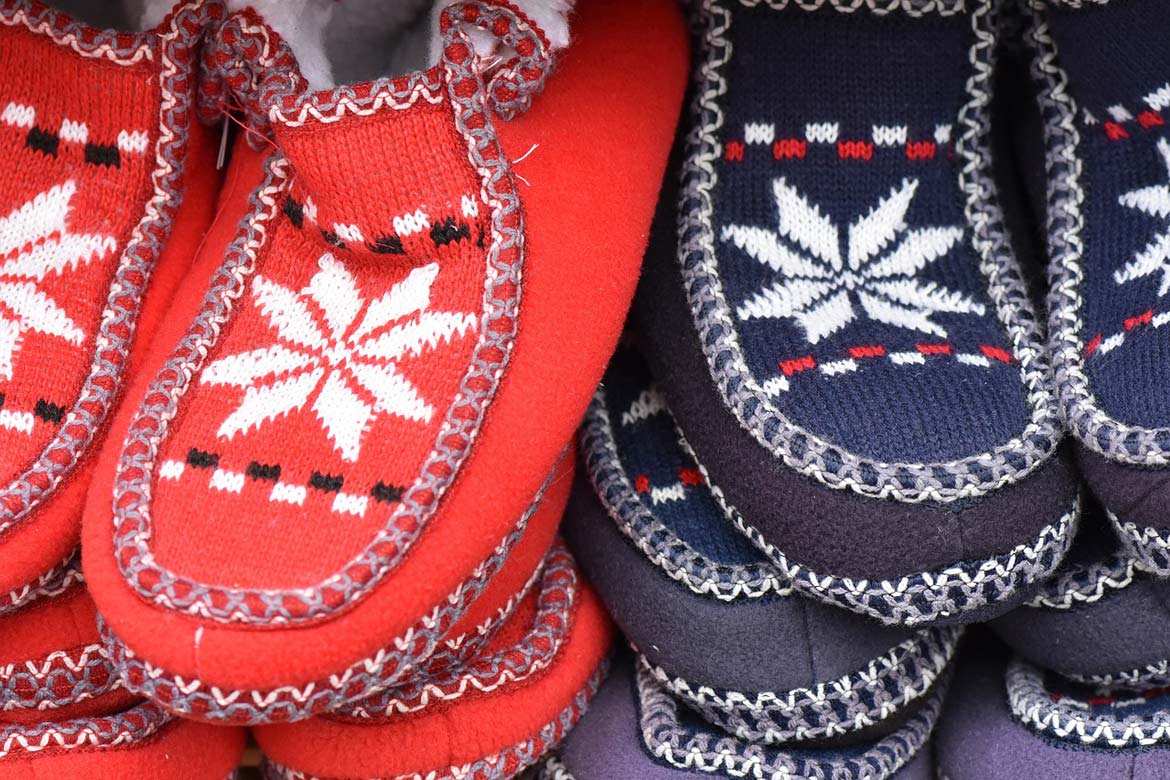
Slipping into life in the Czech Republic starts with slipping into a pair of bačkory – slippers – as soon as you enter your new home or that of a friend.
It has long been a Czech tradition that when you enter a home, you take off your outdoor shoes and put on a pair of slippers, often provided by the host or hostess. Ask a Czech friend, and more often than not they will tell you how they have always changed shoes at the door, as have their parents, and their parents before them, and their parents before them. Most Czech homes keep a stock of extra bačkory ready for guests. And not just one or two pairs, but often anywhere from five to six pairs in a variety of the most common shoe sizes, around 39 for women and 45 for men. This way they are prepared to welcome many guests for an evening meal together or a glass of warm grog as winter closes in. If your host tells you that you do not need to take off your shoes, they are usually just being courteous – a quick glance down will most likely show that they are already wearing bačkory, and you should as well.

But why, you might ask, have this tradition of changing outdoor shoes for slippers? Isn’t it easier to just wipe your shoes on a doormat and keep your warm shoes on? Let’s look at it this way: while walking down the city streets, looking in shop windows or admiring the architecture, it is easy to forget to pay attention to the mud and other… messes waiting on the sidewalk. When you get home, taking off your shoes at the door means that none of that city mess is brought inside onto your clean floors. You slip on a cozy pair of bačkory and are ready to proceed with your day with no need to re-wash your floors.
But where, you might ask, can you buy these bačkory to welcome guests into your home? Shoe stores and clothing stores have them. If you are only staying a few months in the Czech Republic and do not want to spend so much money on slippers, Ikea sells very inexpensive slippers. As one Czech friend told me, “Ikea slippers rule!” as they come in a variety of sizes, are very easy to stack and therefore will not clutter the entryway into your home.
Bačkory are also used outside the home. Even at schools, students and teachers alike will have a pair of slippers or indoor-only shoes that they will wear inside the school building. If you are a parent taking your child to the first day of school and visiting your child’s classroom, you too should bring a pair of indoor-only shoes or slippers to wear inside, or risk being chased down by a school employee holding a pair of slippers or elastic shoe booties for you to wear.
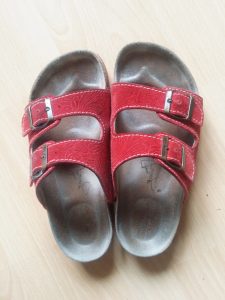 The bačkory tradition is not uniquely Czech, however. Various other central and eastern Slavic countries have similar traditions of removing shoes at the door and putting on slippers, including Lithuania, the Ukraine, and Russia. Head north, and you will also often be taking off your shoes at the door in Sweden and Finland. But the tradition of changing into indoor slippers or shoes is not unique to the West – in Japan, many houses and even apartments are higher than the entryway, which is where outdoor shoes stay, and slippers are put on for walking around inside the house. Japanese schools also often require indoor-only shoes, and even some other places such as churches will have a similar entryway and provide slippers for anyone coming inside. South Korea and Vietnam, as well as numerous other Asian countries, also have a tradition of changing into slippers when entering a home or other types of buildings.
So the next time you walk into a Czech home, or even to another Slavic, Nordic, or Asian home, think about taking off your shoes at the door – your host will be grateful that you respect their clean home, and you will feel much more comfortable padding around in your bačkory.


