

This walking tour is perfect for everyone from young children to families to the young at heart, it is an easy walk because it is entirely flat.
Begin the tour at the Újezd tram stop (trams 9, 12, 20, and 22).
Memorial to the Victims of Communism
This group of seven different figures was made by the famous Czech sculptor Olbram Zoubek (born 1926). The statues symbolize the suffering of the political prisoners of the communist regime (1948-1989). The text at the bottom of the stairs of the monument reads “Victims of the communist regime: 205,486 people condemned, 248 people executed, 4,500 people died in the prisons, 370 people died while crossing the border, 170,939 people emigrated.”
Retrace your steps back to the tram stop and turn right on Všehrdová. On your left you will see a large palace.
Tyršův dům (Sokol building)
This palace was originally built by Italian architects at the end of the 16th century in the late Renaissance style for the noble Kinský family and was later rebuilt in the Baroque style. During the centuries, different noble families (for example, the Michnas and the Schwarzenbergs) owned it. In 1764 it was bought by the army, who used it as a barracks for almost 150 years. By 1900 it was almost a ruin, and in April 1921 it was bought by Czech Sokol and renovated for athletic use. Sokol (from the Slavic word for falcon) is an all-ages gymnastics organization first founded in Prague in 1862 by Miroslav Tyrš and Jindřich Fügner. The renovation created gyms, locker rooms, and even a 20-meter swimming pool. It was officially opened by Sokol in 1925 in the presence of the first Czechoslovak president, T. G. Masaryk. During World War II the building was used by the Hitler Youth, and after the war it belonged to the Charles University Faculty of Sports. In 1990 it was given back to Sokol.
Continue through the park until you get to a small bridge over a stream.
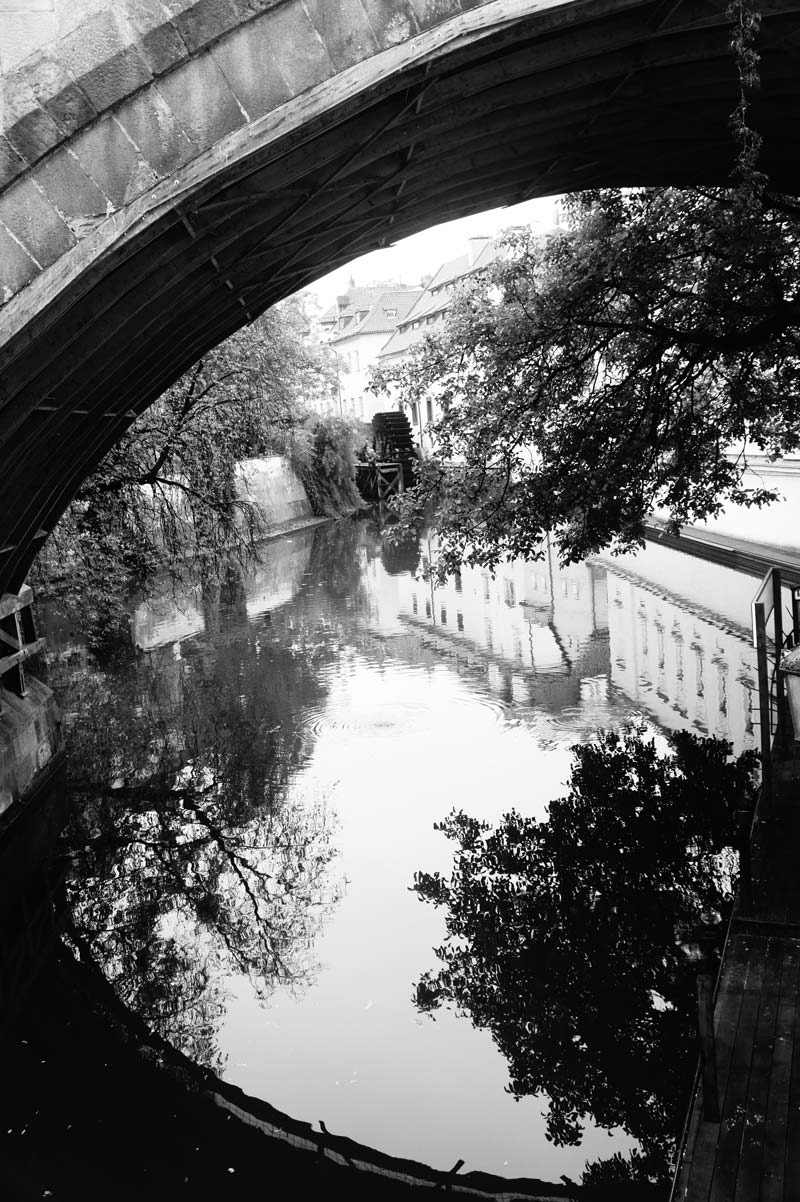
Čertovka (Devil’s stream)
The name Čertovka appeared around 1892; there are different theories for the name’s origin. One legend says that the owner of the mill sold his soul to the devil for the love of a beautiful lady (and maybe for some more wealth as well), signed the contract using his own blood, and finally, when the contract was over, was taken by the devil to hell. Another legend speaks about a strange lady who lived on the island. People didn’t like her and named her Čertovka (Devil’s lady). It is also highly possible that people were afraid of floods, which were always common in that area, so they started to associate the water with the devil and named the stream Čertovka.
Cross the bridge onto Kampa Island.
Kampa Island
This island was originally a big garden with mills. The name Kampa appeared for the first time around 1770 and probably refers to Tycho Gansgeb von Kamp, who had a house there in the 17th century. Kampa is an artificial island created by the Johannites (also called the Knights of Malta), who in the 12th century dug a 740-meter-long canal (Čertovka) and built mills on it. The mills around Kampa Island are the oldest ones in Prague. The first houses appeared around 1550, and there used to be pottery markets, a laundry place, and a natural cold spa.
Walk straight ahead toward the river. On your left you will see a large building.
Sovovy mlýny (Museum Kampa)
This building was once a mill but is now a gallery with modern art. The name Sovovy comes from the surname of the owner, Václav Sova. In the second half of the 19th century, the new owner, František Odkolek, changed the original mills to steam mills inspired by those in the U.S. In 2003 it was turned into the museum, where you can enjoy the collection, the views over the river, and the sculpture garden. In the park close to the building there are black statues of babies without faces by the sculptor David Černý (born 1967).
Exit the sculpture garden and wander through the parks of Kampa, generally bearing toward the Charles Bridge. When the park turns into a paved square, walk partway through the square, turn left, and cross the bridge near the mill. Look down at the stream.
Vodník
Lurking next to the mill is a green figure. This is Vodník, a character from Czech fairy tales. He is something like the spirit of the water, or a water devil, and legend states that he tries to lure people into the water so he can keep their souls in a little cup.
Cross the bridge and continue into the courtyard.
The Lennon Wall
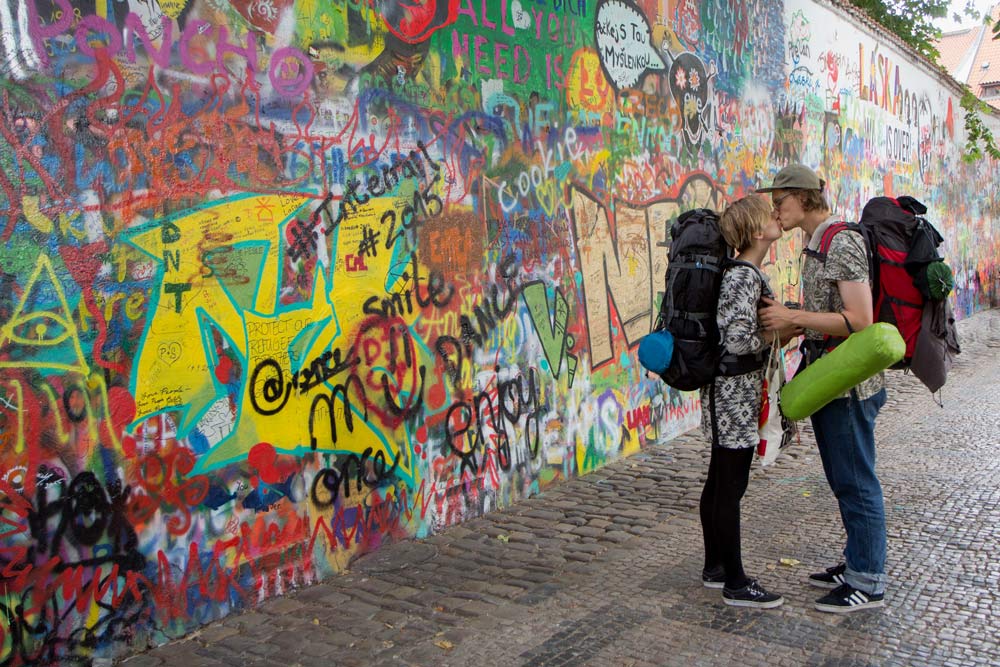
During the late 60s and throughout the 70s, students and artists used this wall to write messages, complaints, and criticisms against the communist regime. The police were always trying to paint over the messages with white, but the inspired graffiti kept reappearing. After the assassination of John Lennon, the wall became his unofficial monument: a wall of freedom where anyone can leave a message. In November 2014 a group of students covered the entire wall in white as a political protest, but within a few days people started to leave messages and paintings again.
Take the first right onto Laženská at the far end of the square and walk a few meters. You will see a large gateway on your right. Walk through the gateway into the courtyard.
The former monastery of the Johannites
The monastery was established in the 12th century as the first monastery of the Johannites in the Czech lands. It was originally a huge complex and even had its own jurisdiction. The courtyard you are standing in was once the interior of a much larger church. The Johannites served as guards of the Lesser (Little) Town because they were strategically close to the river and the bridge. During the Hussite movement it was an almost forgotten place, but the church was reborn around 1640, and the interiors were remodeled in the Baroque style. It even got a new name: the Church of Our Lady in the Chain (if you look up you will see a statue of the Virgin Mary with a chain around her neck).
Our tour is done! If you continue up Laženská, you will reach Mostecká, where you can turn right to cross the Charles Bridge or left to reach Malostranská Náměstí and the trams home.


