

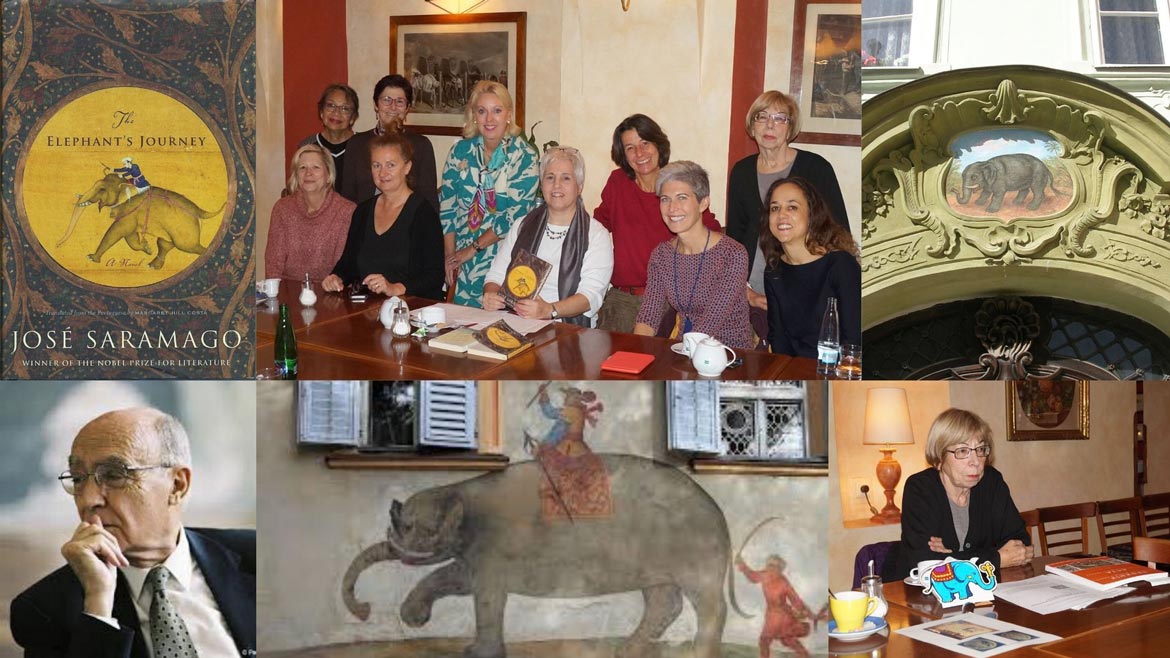
Reviewed by Děvana Pavlíková (CZ)
Even though The Elephant’s Journey, a novel by Nobel Prize-winning author José Saramago, is not a historical fiction, it was inspired by a real historical event. It chronicles a journey undertaken on foot between 1551 and 1552 from Lisbon to Vienna, in heat and snow, by an Indian elephant that was given as a wedding present by the Portuguese King John III. to the Habsburg Archduke Maximillian and his bride.
The large procession of courtiers, soldiers and a considerable amount of workers of assorted trades is lead by the Archduke and his pregnant wife Maria while the elephant Solomon, renamed Suleiman by the Austrians, is accompanied and looked after by his stoic Indian keeper, mahout Subhro whom Maximillian renames Fritz.
They sail across the Mediterranean disembarking in Genoa; their journey then takes them through the cities of northern Italy and, owing to slower progress than planned, they find themselves crossing the Alps and having to negotiate the awesome Isarco and Brenner passes in the deepest winter. The whole entourage reaches Insbruck on the feast of the Epiphany before continuing by barge on the rivers Inn and Danube to the Austrian imperial city of Vienna which was triumphantly reached in May 1552.
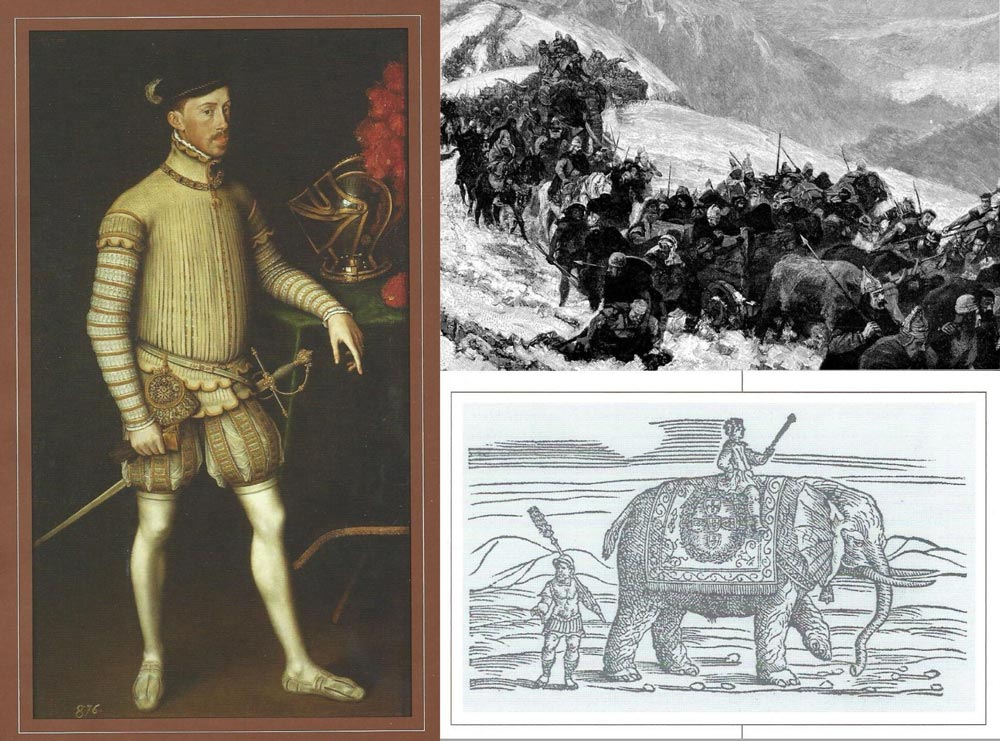
It is the human relationships that make up the narrative. The exotic animal never previously encountered by villagers and townsfolk creates sensation along his route. He is an enigma that gives rise to all sorts of interpretations and Saramago writes in a style where dialogues and the observer’s comments flow in long, rolling sentences that are a testimony to his masterfully use of language; his wit is employed to mock humorously the follies of the powerful elite together with religious superstitions of the sixteenth century while clearly sympathising with the common people represented by the underdog Subhro.
I was very pleased that the IWAP Book Club selected Saramago’s The Elephant’s Journey as one of the books to read at my suggestion. I had read the book several years ago when I became interested in the elephants of the Austrian emperor Maximillian II. because, during my work as a curator in the British library in London, I came across an illuminated miniature of an elephant in one item in the British library‘s manuscripts collection.
The volume is a large Czech gradual handmade in 1570 for choir singing of the Literary Brotherhood at the Church of the Virgin Mary Before Týn in Prague. Books were of course printed, not hand produced, by that time and Bohenia was no exception. In fact it was one of the most prolific printing countries in the world in the sixteenth century.
There was, however, a limit on the size in which a book could be printed and thus, for choir singing where several men stood around a lectern on which a large volume, from which they sang, was placed, required a volume that was big enough to take large lettering and music.
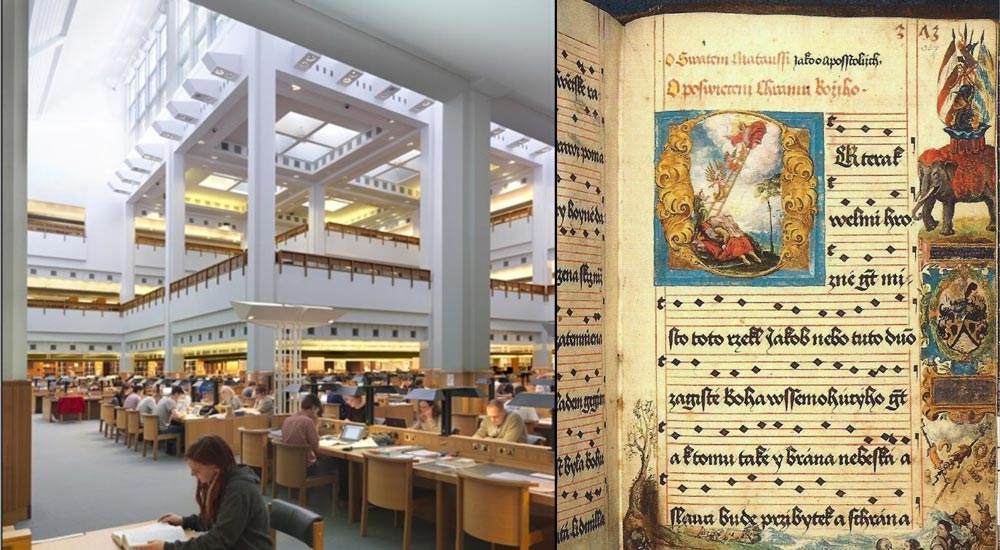
Besides music and song lyrics there are pictorial images in the gradual and one of the illuminated pages depicts a decorated elephant with a description „Live elephant in Prague Square“. This intrigued me. How come that such a rare and exotic animal appeared in Prague at that time and what was it doing there?
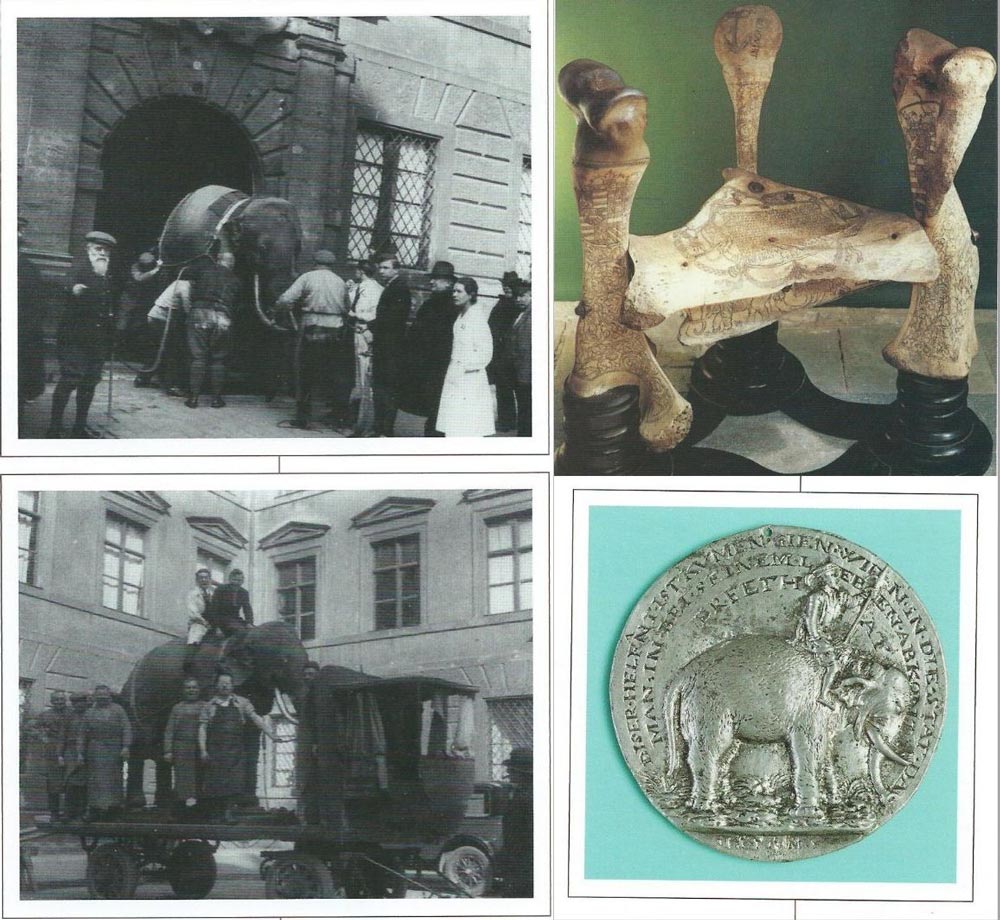
Research in historical sources soon provided me with an answer. The elephant, that was brought to Prague in 1570, was from the menagerie of the Emperor Maximillian II. and it was the Emperor’s second elephant. Thus I learned about Suleiman, the first pachyderm who, just as Saramago informs his readers, died sadly in Vienna only two years after he had completed his perilous journey across the Alps. Saramago does not elaborate further but decorative objects (such as the table below) were made from Suleiman’s bones and his hide was dried and stuffed (ref. black and white photos); as an exhibit he survived until 1945 when his hide was used for shoe leather. Commemorative coins were also made.
Maximillian could not get over the demise of his much loved and celebrated animal but it took him nine years before he managed to acquire a replacement, again via the Spanish Habsburg Court. This time a different route for the animal’s transportation was worked out avoiding the Alps. After landing in Zeeland in September 1563 the elephant Emanuel, as he was called, walked across Europe, ridden by his mahout, to Vienna through Antwerp, Brussels and Cologne arriving in Olomouc in November 1563 creating sensation wherever he appeared.
This journey, however, also took longer than expected and thus Emanuel could not take part in festivities celebrating the coronations of Maximillian II. as King of Bohemia and King of Hungary in 1562 -1563 as originally hoped. But just as Suleiman before him, Emanuel too eventually became part of court festivities, a mascot firing the imagination of court artists like Archimboldo and others who were also the designers of sumptuous tournaments and fetes of the Habsburg court in which Emanuel became the star attraction.
One of these was the Shrove time entertainment in Prague’s Old Town Square on Sunday 26th February 1570 described in historical sources as a magnificent show that also included a live lion and a firework display representing the erupting volcano Etna.The Emperor did not bring from Vienna to Prague the best of his menagerie for the enjoyment of his humble subjects of course, the display was rather a reminder to rebelious Czech nobles of his power. Moreover, the court travelled in Prague for the wedding of the Emperor’s daughter Anna to King of Spain Philip II. which then took place in the St. Vitus Cathedral in May; in June the retinue, including the animals, continued on to Speyer for the wedding of the emperor‘s second daughter, Elizabeth, to Charles IX., King of France. But for those who thus had the opportunity to see the exotic elephant it was once in a lifetime event and many decades passed before Prague had the opportunity to see another pachyderm.
Emanuel lived in his Viennese home longer than his predecessor Suleiman. He died in 1577, outliving by one year his imperial master. His image survives in contemporary drawings, woodcuts and engravings of Bernaert de Rijckere, Lambert van Noort, Jacopo Strada and others.
The painting Terra, a composite head by Giuseppe Archimboldo, includes the elephant among other animals and continues to intrigue and delight art lovers to this day. The miniature in the Czech gradual depicts Emanuel covered by an embroidered red blanket carrying on his back the wooden howdah, or palanquin, with ceremonial Habsburg flags in dynastic colours.
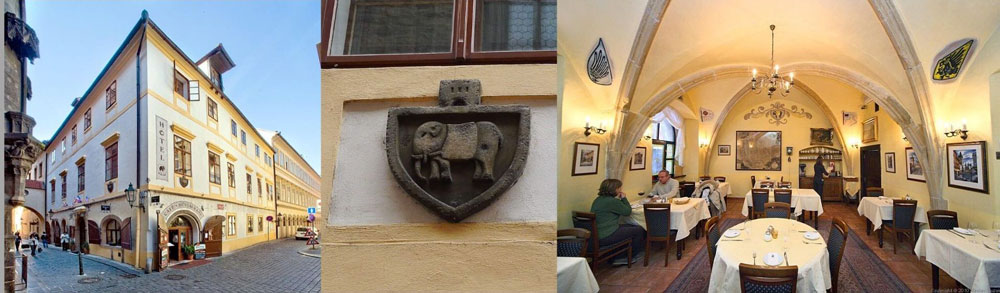
Just off the Old Town Square, in Týnská ulička, near where the elephant Emanuel is said to have knealt before the Emperor and the Empress, is an ancient house, built in the 1330s, called the Black Elephant (U černého slona). Today it is a hotel and visitors can admire its 14th century vaulted ceiling in the ground floor restaurant. The elephant sign above the entrance to the house has been nicely restored and the legend seems to live on.
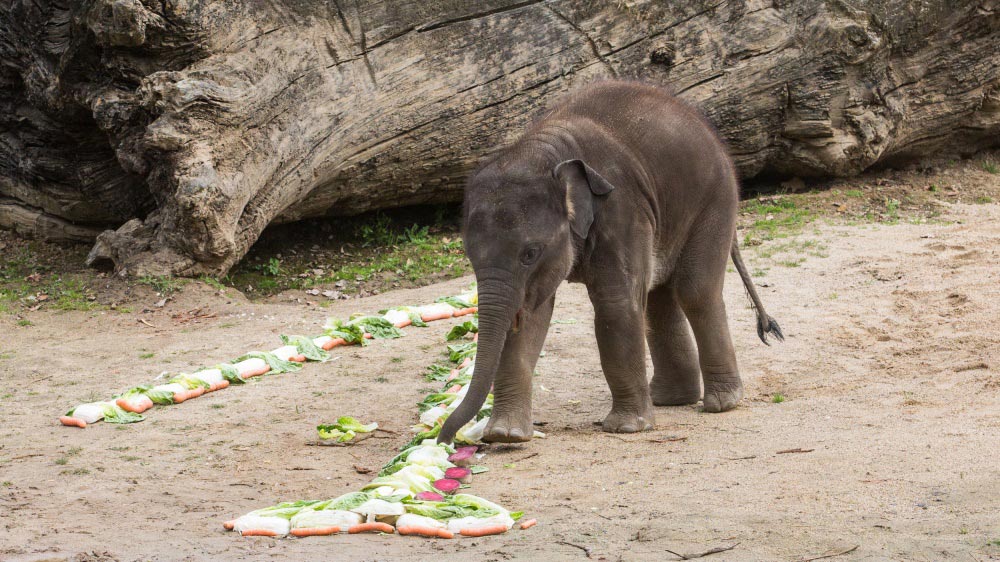
The Prague Zoo has a herd of Indian elephants in its Elephant Valley and June 2016 saw the birth of its first male elephant conceived and born in Prague – he was named Maximillian.


